If your Tampa home feels humid even with the AC running, the most common causes are an oversized air conditioner that shuts off too quickly, a thermostat fan set to “On” instead of “Auto,” a dirty filter or coil, or leaky ductwork pulling muggy attic air into the house. Indoor humidity should stay between 30% and 50%. Above 60%, your home starts to feel clammy and mold can grow.
We’ve been fixing humidity problems in Tampa Bay homes since 1976. Below is what humidity actually is, how to tell if yours is too high, the seven most common causes, what you can do yourself, how a good AC system keeps humidity under control, and the most common fixes.
Need help now? Our licensed technicians serve all of Tampa Bay, 24/7.
What humidity actually is
Humidity is the amount of water vapor in the air. You can’t see it, but it’s always there, and in Tampa there’s a lot of it. Two measurements matter for your home:
Relative humidity
Relative humidity (RH) is the number your thermostat or weather app shows. It compares how much moisture is in the air with the most the air could hold at that temperature, as a percentage. At 100%, the air is completely full and water starts condensing out as dew, fog or rain.
The key thing to understand is that warm air can hold much more water than cool air. That’s why cooling alone doesn’t fix humidity. Take a typical Tampa summer afternoon at 90°F and about 55% relative humidity. If you cooled that same air to 75°F without removing any water, the relative humidity would climb to about 90%. Your home would feel cool but damp, like a basement. Your air conditioner has to pull water out of the air, not just make it colder.
Dew point
The dew point is the temperature at which air becomes completely saturated and water starts to condense. It measures the actual amount of moisture in the air, so it’s the best way to judge how muggy it feels. A dew point in the 50s feels comfortable. In the mid-60s it starts to feel sticky. Tampa’s summer dew points often sit in the mid-70s, which feels oppressive and puts a heavy moisture load on your home.
Why humidity makes you feel hotter
Your body cools itself by evaporating sweat. In humid air, sweat evaporates slowly, so you feel warmer than the thermometer says. At 78°F and 45% humidity, most people feel comfortable. At 78°F and 65%, the same room feels sticky, and most people turn the thermostat down, which raises the electric bill without solving the real problem.
How your AC removes humidity
Your air conditioner does two jobs: it cools the air, and it pulls moisture out of it. Warm, humid air from your home passes over the indoor coil, which runs in the 40s°F, well below the dew point. Moisture condenses on the coil, the same way water beads on a glass of iced tea, drips into a drain pan and flows outside through the condensate line. On a hot Tampa summer day, a healthy system can pull 10 gallons or more of water out of a typical home. When anything stops the AC from doing that second job well, you feel it right away.
How to tell if your indoor humidity is too high
The easiest way is a digital hygrometer. They’re inexpensive and sold at any hardware store, and many smart thermostats show humidity too. If it reads above 55% for more than a day or two with the AC running, something is wrong. Other signs:
- The house feels cool but sticky or clammy.
- A musty smell, especially when the AC kicks on.
- Condensation on windows, vents or the air handler cabinet.
- Black spots on vent covers or ceiling around the vents.
- Wood floors or doors that swell, stick or cup.
- You keep turning the thermostat lower but never feel comfortable.
7 reasons your house is humid with the AC on
1. Your AC is too big for your home
This is the most common cause we find. An oversized system cools the house so fast that it shuts off before it has run long enough to pull out moisture. The temperature looks right, but the air stays wet. It’s called short cycling. If your system runs for only five to ten minutes at a time, oversizing is a likely suspect. Our guide on what size AC you need explains how proper sizing works.
2. Your thermostat fan is set to “On”
With the fan on “On,” the blower keeps running after the compressor stops. The water sitting on the cold coil evaporates and gets blown right back into your house. Switch the fan to “Auto” and many homes drop several percentage points of humidity within a day.
3. A dirty filter or evaporator coil
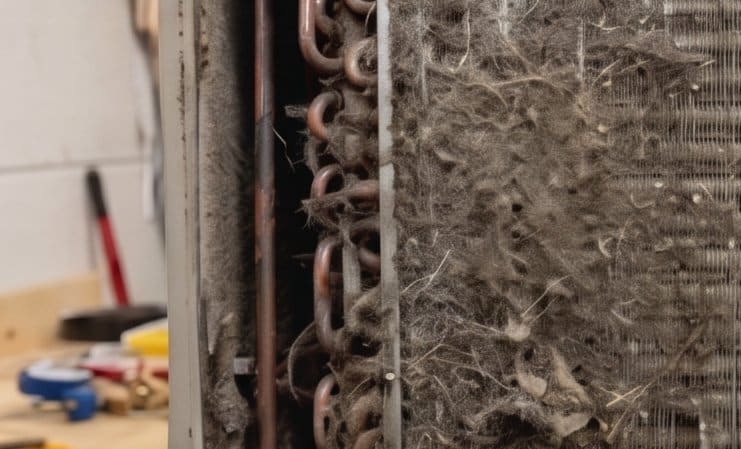
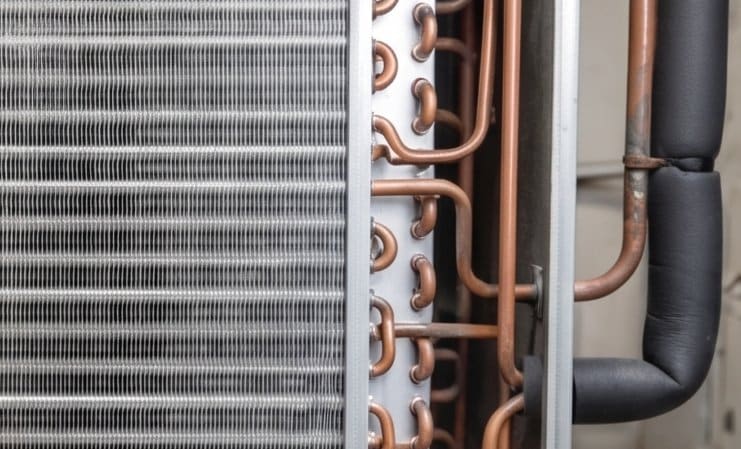
A clogged filter or a coil matted with dust restricts airflow and stops the coil from pulling moisture out efficiently. It can also cause the coil to freeze. Replace standard filters every one to three months in Tampa.
4. Leaky ductwork in a hot attic
Most Tampa homes have ductwork in the attic, where summer temperatures can top 130°F. A torn or disconnected return duct sucks in hot, humid attic air and sends it through your home. Your AC then fights a moisture load it was never designed for. Leaky ducts also raise your electric bill.
5. Low refrigerant or a failing part
Low refrigerant from a leak makes the coil less effective at removing moisture, and often causes ice on the refrigerant lines. A failing blower motor or bad capacitor can do the same. These need a licensed technician.
6. An older single-speed system
Single-stage air conditioners run at 100% or not at all. Two-stage and variable-speed systems run longer at lower speeds, which removes far more moisture. If your system is 12 to 15 years old, upgrading can fix both comfort and humidity.
7. Moisture sources inside the home
Long showers without the bath fan running, cooking without the range hood, a clothes dryer vent that’s disconnected, or a lot of indoor plants can all add moisture. So can gaps around doors, windows and attic hatches that let outside air in.
How you can lower the humidity in your home
Start with these free and low-cost steps. Many homes see a difference within a day or two.
- Set the thermostat fan to “Auto.” With the fan on “On,” water on the coil gets blown back into your home between cooling cycles.
- Replace the air filter. A clogged filter cuts airflow and the coil’s ability to remove moisture. In Tampa, change standard filters every one to three months.
- Don’t turn the AC off when you leave. A closed-up Tampa house with the AC off gets humid fast, and it takes hours to dry back out. Set it a few degrees higher instead, no warmer than about 82°F.
- Use your exhaust fans. Run the bath fan during and 20 minutes after showers, and the range hood while cooking. Make sure they vent outside, not into the attic.
- Keep windows and doors closed while the AC runs, and don’t leave the garage door to the house open.
- Seal air leaks. Weatherstripping on doors, caulk around windows and a sealed attic hatch keep humid outdoor air out.
- Check the dryer vent. A disconnected or crushed dryer vent can dump gallons of water vapor into your home or attic with every load.
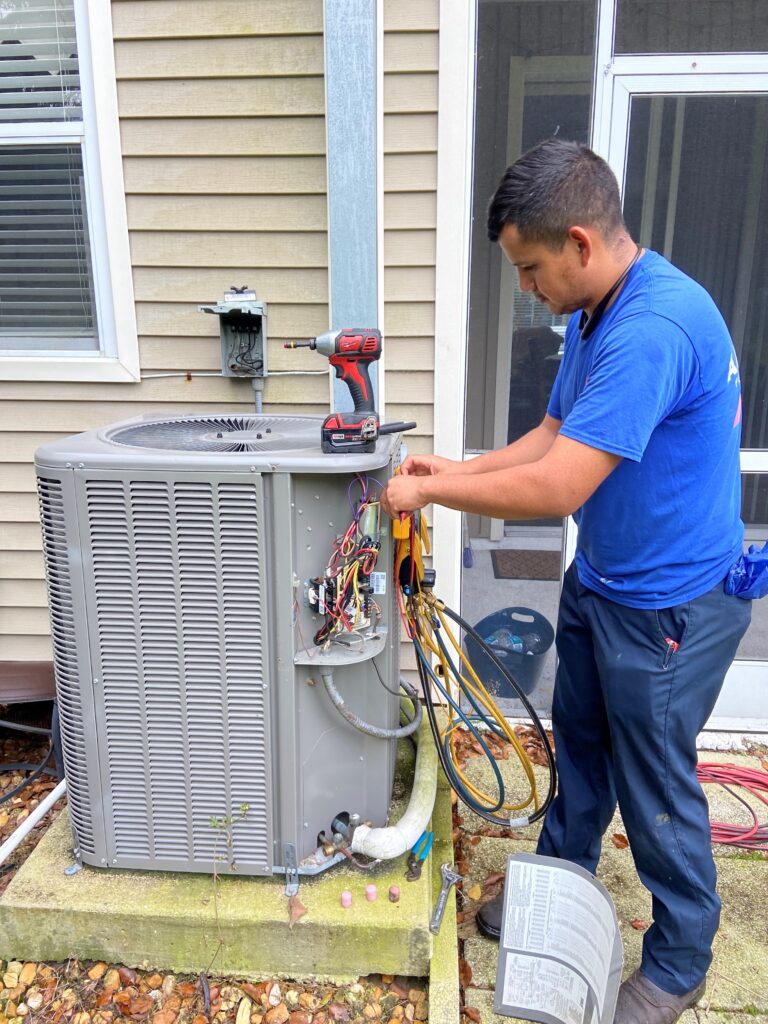
- Make sure the condensate drain is flowing. Find the PVC pipe near your outdoor unit and check that water drips from it while the AC runs.
- Use a portable dehumidifier for problem rooms like a closet, laundry room or converted garage.
- Turn on your thermostat’s dehumidify setting if it has one. Many newer thermostats can run the AC a little longer or slow the blower to remove more moisture.
- Track it with a hygrometer. Aim for 45% to 50% in summer. If it stays above 55% after these steps, the problem is likely your AC system, and it’s time for a technician.
How a good AC system controls humidity
The steps above help, but in Tampa, your air conditioner does most of the work. A well-designed, well-installed system controls humidity in five ways:
1. It’s sized for your home
A correctly sized system runs long, steady cycles, and long cycles are when the most moisture comes out. An oversized system cools the house in a few minutes and shuts off before the coil gets cold enough, long enough, to dry the air. Proper sizing starts with a Manual J load calculation. See what size AC you need.
2. It can slow down
This is the biggest difference between systems:
| System type | How it runs | Humidity control |
|---|---|---|
| Single-stage | Full power or off | Fair. Short cycles on mild days leave moisture behind |
| Two-stage | Low speed most of the day, high on hot afternoons | Good. Longer, gentler cycles remove more moisture |
| Variable-speed | Adjusts output in small steps and runs almost continuously at low speed | Best. Steady operation keeps humidity low all day |
When a two-stage or variable-speed system runs at low speed, air moves across the coil more slowly, the coil stays colder, and more water condenses out. You get drier air at the same thermostat setting, which means you can often set the thermostat a degree or two higher and still feel comfortable. Variable-speed systems like the Trane XV series are paired with communicating controls that can manage temperature and humidity together.
3. It has a variable-speed blower
A variable-speed indoor blower can slow down at the start of each cycle and in dehumidify mode, giving the coil more time to pull water out of the air.
4. Its ductwork is sealed
Even the best system can’t keep up if leaky ducts in a hot attic are pulling in humid air. Sealed, insulated ducts and properly sized returns let the system dry the air it’s supposed to.
5. It’s maintained
A clean coil, a clear condensate drain and the right refrigerant charge keep your system removing moisture the way it was designed to. A yearly tune-up catches problems before you feel them. Our maintenance plans cover this.
For homes that stay humid even with a healthy, properly sized system, a whole-home dehumidifier can be added to your ductwork to control humidity separately from temperature.
Common fixes for high humidity
| Fix | When it’s the answer |
|---|---|
| Fan setting and filter change | Fan set to “On” or a clogged filter |
| AC tune-up with coil cleaning | Dirty coil, slow drain, worn parts |
| Duct repair and sealing | Leaky or disconnected attic ducts |
| Whole-home dehumidifier | Homes that stay humid even with a healthy, properly sized AC |
| Right-sized, variable-speed AC | Oversized or aging systems |
Why high humidity is worth fixing quickly
Humidity above 60% for weeks at a time lets mold grow in ducts, closets and drywall. It also feeds dust mites, which worsen allergies and asthma. Many people lower the thermostat to feel comfortable, which raises the electric bill without fixing the problem. Learn more about our indoor air quality services.
Frequently asked questions
What is humidity?
Humidity is the amount of water vapor in the air. Relative humidity, the number on your thermostat, compares how much moisture the air holds with the most it could hold at that temperature. Because warm air holds more water than cool air, cooling air without removing moisture makes the relative humidity go up.
How can I lower the humidity in my house?
Set your thermostat fan to Auto, change the air filter, run bath and kitchen exhaust fans, keep the AC on when you leave, and seal air leaks. If humidity stays above 55%, have your AC checked for oversizing, a dirty coil or leaky ducts.
What kind of AC is best for humidity?
A correctly sized two-stage or variable-speed system. These run longer at lower speeds, which pulls much more moisture out of the air than a single-stage system that turns on and off.
What should the humidity be in my house in Florida?
Keep indoor humidity between 30% and 50%. In Florida summers, 45% to 50% is a realistic target. Anything consistently over 60% is too high and invites mold.
Does my AC remove humidity?
Yes. Your AC removes moisture as air passes over the cold indoor coil, and the water drains out through the condensate line. It only works well when the system is the right size, the coil is clean and the system runs long enough.
Why is my house humid but cold?
Usually because the AC is oversized or the fan is set to “On.” The system cools the air quickly but doesn’t run long enough to dry it, or the fan blows moisture back off the coil.
Should I set my AC fan to On or Auto in Florida?
Auto. In humid climates like Tampa, running the fan continuously puts moisture from the wet coil back into your home.
Do I need a whole-house dehumidifier in Tampa?
Most homes don’t, if the AC is sized correctly and the ducts are sealed. A whole-home dehumidifier makes sense for homes that stay humid after those problems are fixed, homes with lots of glass or high ceilings, and homes that sit empty part of the year.
Can high humidity cause mold in my air ducts?
Yes. Ductwork and air handlers are dark and stay damp, so humidity above 60% gives mold what it needs to grow. A musty smell when the AC starts is a common early sign.
Why Tampa homeowners choose Alvarez for humidity problems
- 50 years in Tampa Bay. We’re a family-owned company that has served Tampa Bay homes since 1976.
- Thousands of 5-star reviews. We’re rated 4.8 stars from more than 2,700 Google reviews and are BBB A+ accredited.
- No subcontractors. Every job is done by our own trained, licensed technicians, so the people who quote your job are accountable for the work.
- We guarantee our work. We stand behind every job we do. If something isn’t right, we come back and make it right.
Get your humidity problem diagnosed
We’ll find out why your home is humid and give you a written estimate with your options before we do any work. Call (813) 655-7520 or request service online. Learn more about our AC repair service.
Book online in under a minute, or call and talk to a real person.