Water Treatment in Tampa Bay
Start With a Free Water Test, Not a Sales Pitch
Softeners, conditioners, carbon filters and reverse osmosis each solve a different problem. None of them does everything. That's why we start by testing your water's hardness and talking through what you're seeing at the tap, then recommend only what you need.
Tampa Bay water ranges from moderately hard to very hard depending on your utility or well, and many utilities disinfect with chlorine or chloramine. Private wells can also carry iron or sulfur. Our free test measures your hardness, which tells us how much scale protection your home needs. For taste, odor or staining, we'll explain which filtration options fit and whether a separate lab analysis makes sense.
Test
A free in-home hardness test at your tap, so you know exactly how hard your water is.
Explain
We explain your hardness result, what it means for scale, fixtures and your water heater, and talk through any taste, odor or staining you've noticed.
Recommend
We recommend the system, or combination, that fits your results, household size and plumbing, in writing before any work starts.
Install
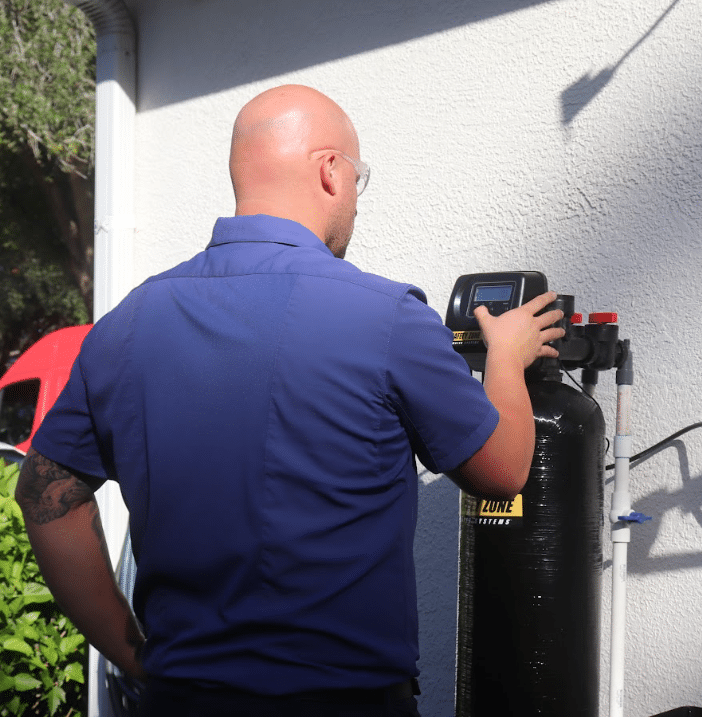
Licensed plumbers install it to code and show you the upkeep it needs.
Know the Difference
Softener vs. Conditioner vs. Carbon Filter vs. Reverse Osmosis
These four systems are often lumped together, but they work in completely different ways.
| System | How it works | What it does | What it does not do | Upkeep |
|---|---|---|---|---|
| Water softener whole house, salt-based | Ion exchange: resin swaps the calcium and magnesium that make water hard for sodium or potassium. | Removes hardness. Stops scale in pipes, fixtures and water heaters, reduces spots on glass and shower doors, and helps soap and detergent lather. | Does not remove chlorine, chemicals or most contaminants, and does not improve taste on its own. Adds a small amount of sodium. | Add salt regularly. Periodic regeneration uses some water. |
| Water conditioner whole house, salt-free | Changes the form of hardness minerals so they are less likely to stick to surfaces as scale. | Helps reduce scale buildup in pipes and water heaters, with no salt and no wastewater. | Does not remove minerals, so water is not "soft." Spots on glass and fixtures can still appear. Does not filter. | Media replacement every few years. |
| Carbon filter whole house | Activated or catalytic carbon adsorbs chlorine, chloramine and some organic compounds. | Reduces chlorine or chloramine taste and odor at every tap and shower. Often paired with a sediment pre-filter. | Does not soften water or remove hardness minerals. | Filter or media replacement on a set schedule. |
| Reverse osmosis usually under the kitchen sink | Pushes water through a fine membrane that removes most dissolved solids. | Produces high-quality drinking and cooking water, including removing much of the sodium added by a softener. Reduces a wide range of dissolved contaminants (check the system's NSF/ANSI certification for specifics). | Not a whole-house solution. Does not protect pipes or appliances from scale. | Pre-filters about yearly, membrane every few years. |
See How It Works
How Your Softener Makes Water Soft, and Keeps Your RO Safe
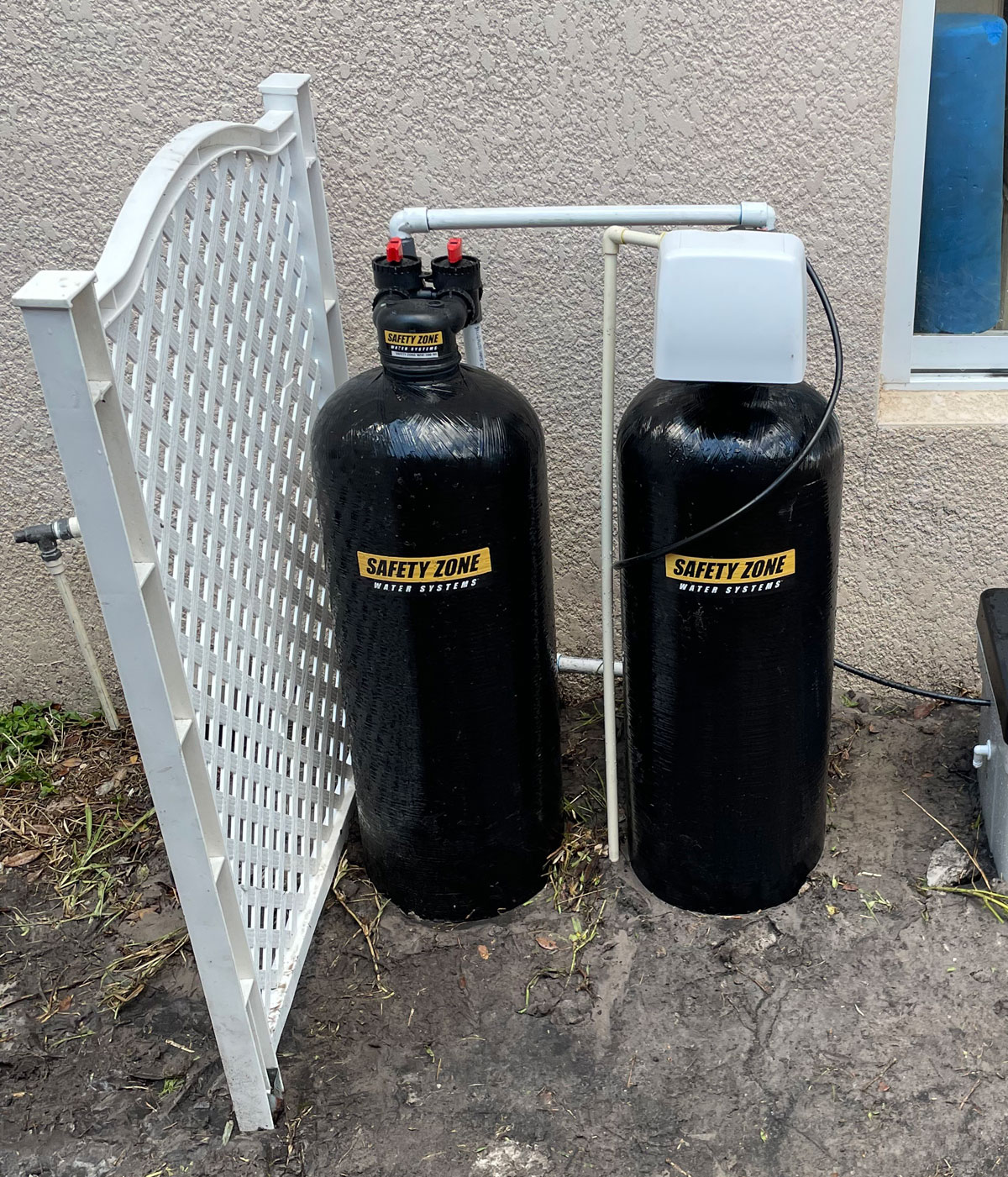
A softener and a reverse osmosis system work as a team. The softener pulls out the hardness that would scale up the RO membrane. Our setup keeps a safety zone of fresh resin in reserve, so hard water never gets through to your RO. Step through it below.
Inside the softener: ion exchange
One resin bead, up closeThe safety zone that protects your RO
Run 30 days of water use and watch what reaches the membraneSame house, same water use: 30 days side by side
Why hardness hurts an RO
Calcium and magnesium are concentrated as water is pushed through the RO membrane. That scale clogs the membrane's pores, which slows your drinking water and shortens membrane life.
What the safety zone does
We set the softener to keep the last stretch of resin in reserve. When use dips into that reserve, it regenerates at 2 AM, while nobody is running water, so the RO always gets soft water.
The trade-off
A softener with a safety zone regenerates a little more often, so it uses a bit more salt and water. In exchange, your RO membrane never sees a hardness spike.
Find out how hard your water is.Your hardness result sets the softener size and the safety zone for your home.
Book Your Free Water TestIllustration only. Example sizing assumes about 75 gallons per person per day and a softener sized for roughly a week of use. Your plumber will set capacity, regeneration and reserve based on your water test and household. 1 grain per gallon (gpg) ≈ 17.1 ppm (mg/L) hardness.
Which One Do You Need?
Match the Problem to the Right Treatment
Your hardness result and what you're seeing at the tap guide the recommendation. Here is how common symptoms usually line up.
White scale, spotty dishes, soap that won't lather
Usually hard water.
Water softener, or a salt-free conditioner if you mainly want to protect pipes and your water heater.
Chlorine or "pool" taste and smell
Usually the disinfectant your utility adds.
Whole-house carbon filter.
Rotten-egg smell
Often hydrogen sulfide in well water, or a reaction inside the water heater if it only happens with hot water.
Needs a separate water analysis, not a hardness test. The fix may be specialty filtration or a water heater anode change.
Orange or rust-colored stains
Often iron, common with private wells, or corroding pipes.
Needs a separate water analysis or a pipe inspection. Iron filtration or some softeners can help with low iron.
You want the best possible drinking water
Or you're concerned about specific dissolved contaminants.
Reverse osmosis at the kitchen sink.
Water heater full of sediment or scale
Scale cuts efficiency and shortens heater life, especially with tankless units.
Softener or conditioner, plus a water heater flush.
FAQ
Water Softener & Filtration Questions
Do I need a water softener in Tampa?
It depends on your hardness level and your goals. Many Tampa Bay homes have hard water, but the right answer comes from a hardness test. If scale, spotting and short water heater life are your main issues, a softener is usually the most effective fix.
What's the difference between a water softener and a water conditioner?
A softener removes the hardness minerals through ion exchange, so water is truly soft. A salt-free conditioner leaves the minerals in the water but changes them so they're less likely to form scale. Conditioners need no salt, but they won't stop spots or make water feel soft.
Will a water softener make my water taste better?
Not by itself. Softeners remove hardness, not the chlorine or chloramine that usually causes taste and odor. For better taste, a carbon filter or reverse osmosis system is the right tool.
Is softened water safe to drink?
Softened water is generally safe to drink. It contains a small amount of added sodium, so people on sodium-restricted diets often add a reverse osmosis system at the kitchen sink or use potassium chloride instead of salt.
What does the free water test check?
It measures your water's hardness at your tap. We explain the result and what it means for scale, fixtures and your water heater. The free test does not check for chlorine, iron, sulfur or other contaminants; if you're noticing taste, odor or staining, we'll talk through options and whether a separate lab analysis makes sense. There's no obligation to buy.
How much maintenance do these systems need?
Softeners need salt added regularly. Carbon filters need periodic media or cartridge changes. Salt-free conditioners need media replaced every few years. Reverse osmosis needs pre-filters about once a year and a new membrane every few years. We'll give you a schedule for your system.