Tampa’s tap water is safe to drink and met every federal and state standard in the City of Tampa’s 2025 water quality report. It is also very hard, averaging 211 mg/L (about 12.3 grains per gallon), and it’s disinfected with chloramine. The hardness is what causes white scale on faucets, shorter water heater life and spotty dishes. The chloramine is what most people notice in taste and smell. Tampa also stopped adding fluoride in July 2025 under state law.
We’ve been installing water softeners and filtration systems in Tampa Bay homes since 1976. Here’s what’s in Tampa’s water, what it does to your home, and which treatment actually fixes each problem.
Need help now? Our licensed technicians serve all of Tampa Bay, 24/7.
Where Tampa’s water comes from
The City of Tampa Water Department serves more than 733,000 people. Its main source is the Hillsborough River. The city also stores treated water underground in the aquifer for dry months, and in 2025 bought about 2.7% of its supply from Tampa Bay Water when needed. The river water is treated with ozone, which improves taste and odor, then disinfected.
Not every Tampa Bay home gets City of Tampa water. Hillsborough County, Pinellas County, Pasco County and other utilities run their own systems, and some homes are on private wells. Your water bill shows your provider, and each one publishes its own annual water quality report.
Tampa water quality at a glance (2025 report)
| Measure | Tampa result | What it means |
|---|---|---|
| Hardness | 211 mg/L (12.3 grains per gallon) | Very hard. Above 180 mg/L is classified as very hard |
| Disinfectant | Chloramine, 3.6 ppm highest annual average | Below the 4.0 ppm limit. Causes the “pool” taste some people notice |
| Fluoride | No longer added as of July 2025 | Natural levels remain low |
| Lead (90th percentile) | 1.5 ppb (second half of 2025) | Well below the 15 ppb action level. Lead mostly comes from older home plumbing, not the city system |
| Copper (90th percentile) | 0.253 to 0.287 ppm | Well below the 1.3 ppm action level |
| Sodium | 51 mg/L | Below Florida’s 160 mg/L standard |
| pH | 7.88 | Slightly alkaline, normal for treated water |
| Violations | None | Met all standards in 2025 |
Source: City of Tampa 2025 Water Quality Report. Results for other utilities will be different.
What hard water does to your Tampa home
At 12 grains per gallon, Tampa’s water leaves behind calcium and magnesium everywhere it goes:
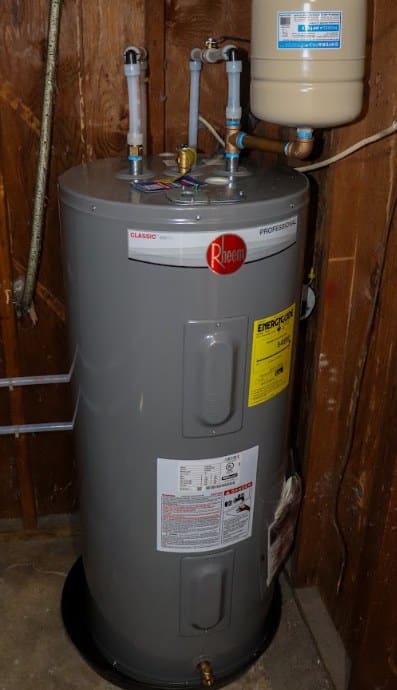
- Water heaters: scale settles in the tank and coats heating elements, which lowers efficiency and shortens the heater’s life. It’s also why tankless heaters here need regular descaling.
- Faucets and shower heads: white crust and clogged aerators reduce pressure. See our guide to low water pressure.
- Dishes and glass: spots and cloudy film on glassware and shower doors.
- Appliances: scale shortens the life of dishwashers, washing machines, ice makers and coffee makers.
- Skin and hair: soap doesn’t lather well, leaving a film that can make skin feel dry and hair dull.
What chloramine means for you
Chloramine is a combination of chlorine and ammonia. It lasts longer in the pipes than chlorine alone, which keeps water safe all the way to your tap. A few things to know:
- Taste and smell: some people notice a chemical or pool-like taste.
- Standard carbon filters don’t remove it well. Removing chloramine takes catalytic carbon and more contact time than a basic pitcher filter provides.
- Fish tanks and ponds: chloramine is toxic to fish, so use a dechlorinator that specifically treats chloramine.
- Kidney dialysis at home: patients need water treatment that removes chloramine. Ask your care provider.
- Temporary chlorine switches: the city periodically switches to free chlorine for a few weeks for system maintenance, which can make the chlorine smell stronger.
Which water treatment fixes which problem
| Problem | Best solution |
|---|---|
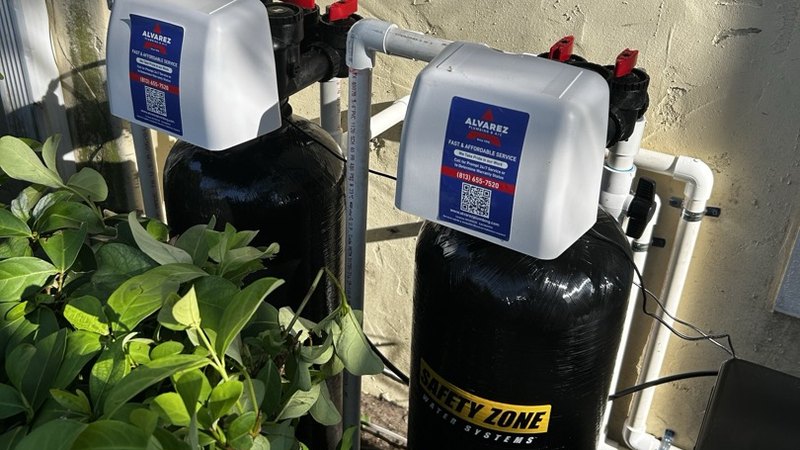
| Scale, spots, appliance wear | Whole-home water softener |
| Chloramine taste and smell throughout the house | Whole-home catalytic carbon filter |
| Best-tasting drinking and cooking water | Under-sink reverse osmosis system |
| Hardness and chloramine together | Softener plus carbon filter combination |
Frequently asked questions
Is Tampa tap water safe to drink?
Yes. The City of Tampa’s 2025 water quality report shows no violations and all detected contaminants below federal and state limits. Many people still filter it for taste.
How hard is Tampa water?
Very hard. City of Tampa water averaged 211 mg/L, or about 12.3 grains per gallon, in 2025.
Does Tampa water have fluoride?
The City of Tampa stopped adding fluoride in July 2025 because of a new state law. Low natural levels are still present.
Why does my Tampa tap water smell like chlorine?
Tampa disinfects with chloramine, which can taste or smell like chlorine. The smell is often stronger during the city’s temporary switches to free chlorine for system maintenance.
Do I need a water softener in Tampa?
Most Tampa homes benefit from one. At more than 12 grains per gallon, a softener protects your water heater, appliances and fixtures and cuts down on cleaning.
Does a water softener remove chloramine?
No. A softener removes hardness minerals. To remove chloramine, you need a catalytic carbon filter. Many Tampa homes use both.
Is there lead in Tampa water?
The city’s system has no lead service lines, and 2025 testing was well below the lead action level. Lead can still come from older faucets and solder inside a home. If your home was built before 1986, testing your tap water is a good idea.
Why Tampa homeowners choose Alvarez for water treatment
- 50 years in Tampa Bay. We’re a family-owned company that has served Tampa Bay homes since 1976.
- Thousands of 5-star reviews. We’re rated 4.8 stars from more than 2,700 Google reviews and are BBB A+ accredited.
- No subcontractors. Every job is done by our own trained, licensed technicians, so the people who quote your job are accountable for the work.
- We guarantee our work. We stand behind every job we do. If something isn’t right, we come back and make it right.
Get your water tested
We’ll test your water and recommend only the treatment your home needs, with a written price before any work starts. Call (813) 655-7520 or request service online. Learn more about our water treatment services.
Book online in under a minute, or call and talk to a real person.